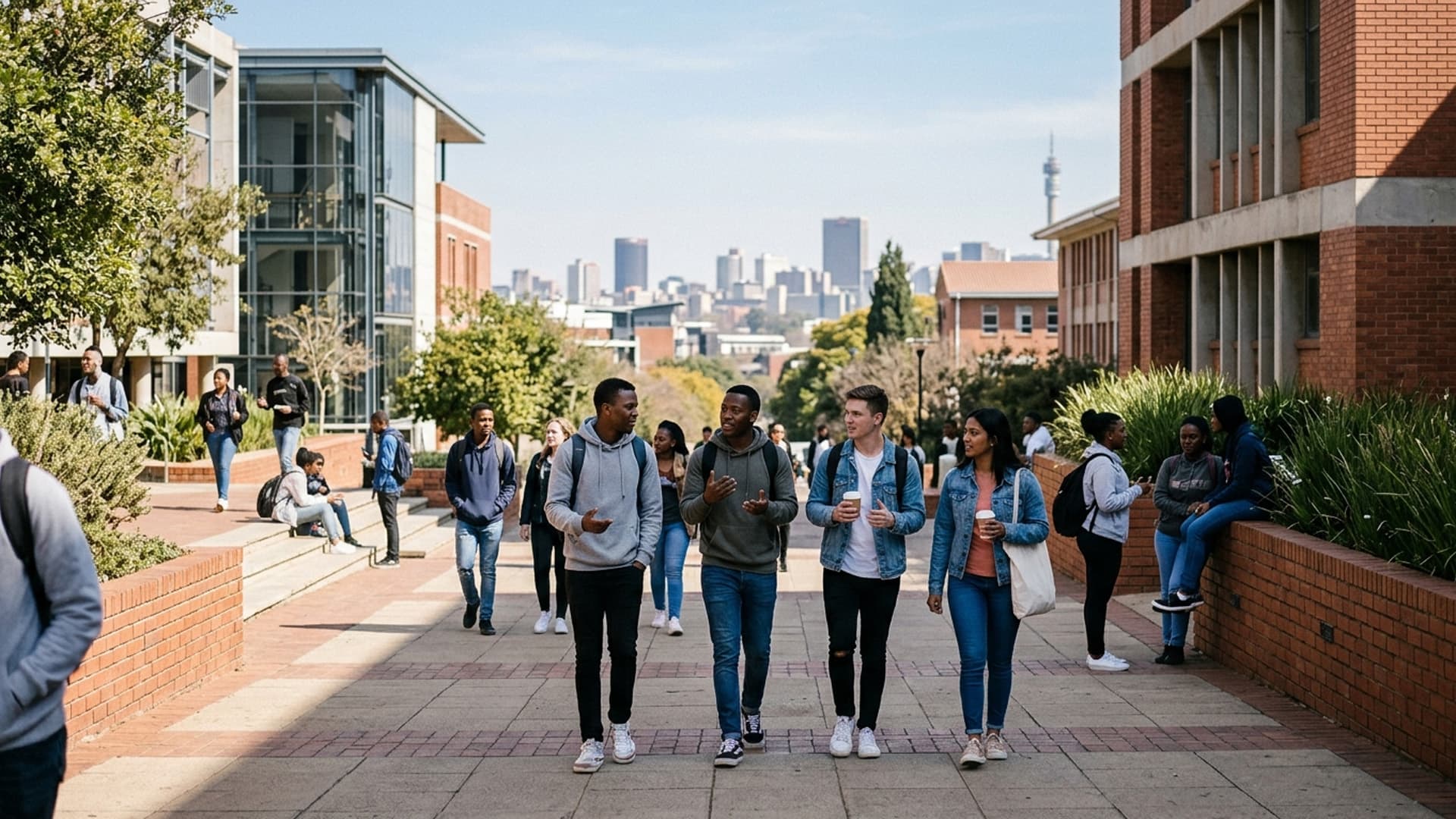
In Gauteng, the Campus Day Often Extends Beyond the Lecture Hall
For Gauteng students, campus life is shaped by the links between study, transport, work and the wider urban region.
A university campus does not sit apart from the city around it. In Gauteng, where institutions and student communities are spread across a large urban region, the day can connect lectures with transport, work, family responsibilities and social life. The rhythms of the city become part of the student experience.
That context affects how people use campus. Some students spend long stretches there; others arrive for a particular class and continue their day elsewhere. Spaces for study, collaboration and rest can make a difference, as can clear communication about where services are located and when they are available. These are not small design details: they influence whether students can participate fully in academic life.
Universities also contribute to the places around them through research, cultural activity and the presence of young people bringing new ideas into public life. The relationship is reciprocal. A city offers students opportunities and challenges; a campus can shape the neighbourhood through the people and activities it brings together.
South Africa University’s Gauteng coverage can explore this connection between institutions and everyday urban life. The story of higher education is not only what happens inside a lecture theatre, but how learning fits into the wider places students call home.
Coordinate with course and support staff
If the timetable repeatedly conflicts with transport or work, contact the department early and explain the practical constraint. Ask whether an alternative tutorial, recording or timetable adjustment exists; do not assume one is guaranteed. Keep the response and follow the formal process. Early communication gives staff more opportunity to explain options than a missed-class pattern discovered later.
For students who travel a long distance, identify a campus contact and a quiet place to wait if a connection is missed. Check service notices before leaving and share significant route changes privately with someone trusted. The aim is to make travel predictable enough that attention can return to learning.
Campus life is connected to the wider city
For students in Gauteng, a campus day may involve more than classes. Travel between home, campus, work and family responsibilities can shape when study happens and how much energy remains. The experience varies across the region and between campuses, so it helps to plan around the actual route rather than an ideal timetable.
Before term begins, test the journey at a time similar to the expected commute. Check current public transport, campus shuttle or driving information from the relevant operators. Identify the campus entrance and the building where the first class takes place. A journey that reaches the gate on time may still need additional minutes to cross a large campus.
Build buffers around fixed commitments
Use realistic travel estimates and add a buffer for delays, transfers, traffic and walking. If a class begins shortly after another commitment, consider what happens when one runs late. A timetable with no recovery time can turn ordinary disruption into missed learning. Where possible, discuss alternatives with the department or employer before the semester becomes busy.
For students using several modes of transport, note the transfer points and the last return option. Save current service information and know how to check for disruptions. Do not rely on an old screenshot or someone else's route if the schedule has changed. Keep a backup plan that is safe and affordable for the situation.
Use travel time thoughtfully
Some students can read or listen during a commute; others cannot because of crowding, motion sickness, safety or limited connectivity. Do not assume that travel time is available study time. If it is useful, reserve lighter tasks such as reviewing notes or listening to course material, and keep deeper work for a suitable environment.
Protect privacy when using devices in public. Avoid opening sensitive student records where others can see them, and use headphones responsibly. Keep essential materials available offline if network access may be unreliable. A commute can support a routine, but it should not be the only time a student has to prepare.
Find productive places between activities
Students with a long gap between class and transport may need a reliable place to study, eat or rest. Learn library hours, quiet areas, computer access and campus policies. Identify safe public spaces and understand when buildings close. If a student has accessibility needs, check entrances, lifts, seating and toilets before relying on a particular route.
Choose a place that matches the task. A group assignment may need a room that permits discussion; reading may work better in a quieter area. Keep belongings secure and follow campus guidance. A useful study routine depends on spaces that are genuinely available, not just attractive in a campus brochure.
Consider costs and time together
Compare travel cost, travel time and reliability when planning a weekly routine. The cheapest option may require additional transfers; the fastest may not be available for every class time. Include parking, fuel, fares and meals in a realistic student budget. Official student support or transport services may provide current information about available assistance.
If the commute is consistently affecting attendance or wellbeing, speak with an academic adviser or student support service. There may be timetable options, online resources or other support, though availability depends on the programme. Ask early and use official processes rather than relying on a rumour about what can be changed.
Make campus connections part of the routine
Commuting can make it harder to join activities that happen after class. Students can look for society meetings, peer study groups or faculty events that fit the actual schedule. One regular activity may be more sustainable than trying to attend several. If an event ends late, consider the route home and available transport before committing.
Informal campus connections can support learning. A classmate may share notes about a room change or clarify how a tutorial works. Keep academic information verified through official systems, but use peer networks for mutual support. A commuter student belongs to campus even if they leave after class each day.
Plan for safety and changing conditions
Follow the institution's current advice about campus access, transport and safety. Share a route or arrival plan with someone trusted when useful, keep emergency contacts accessible and avoid shortcuts that are unfamiliar or poorly lit. If a service changes, verify the alternative before travelling. Safety guidance can differ by location and time, so use current local information.
Keep a charged phone and necessary identification, but protect personal information. Do not post live travel details publicly. If plans change, let a trusted person know through a private channel. These steps are practical, not a reason to avoid campus life.
Design a routine that can adapt
Review the commute after the first few weeks. Actual journey times, class patterns and preferred study spaces may differ from expectations. Adjust departure times and study blocks. Keep one flexible period each week for assignments or disruptions. A routine should support learning rather than punish students when one trip takes longer than planned.
Gauteng campus life is shaped by the connection between study and the wider urban region. Realistic travel planning, useful spaces, manageable costs and social participation can help students make that connection work. The goal is not to eliminate commuting, but to build a routine that respects its place in the student experience.
Elisha Roodt
Sharing authentic stories and expert insights from the heart of South Africa's higher education landscape.
More From Gauteng

Vaal University of Technology (VUT)
Vaal University of Technology (VUT) is a university located in the city of Vanderbijlpark, South Africa. It was established in 2002, and is focused on providing vocational and technical education.

University of South Africa (UNISA)
The University of South Africa (UNISA) is a distance education university located in Pretoria, South Africa. It is the largest university in the country and the only distance education university

University of the Witwatersrand (Wits)
The University of the Witwatersrand (Wits) is a public research university located in Johannesburg, South Africa. It was founded in 1896 and is one of the oldest and most prestigious

University of Pretoria (UP)
The University of Pretoria (UP) is a public research university located in Pretoria, South Africa. It was founded in 1908 and is one of the oldest universities in South Africa.

Tshwane University of Technology (TUT)
The Tshwane University of Technology (TUT) is a university located in the city of Pretoria, South Africa. It was established in 2004 by the merger of the Technikon Northern Gauteng,