Sustainability in Higher Ed: Green Initiatives Across Campuses
Campus-Led Energy, Waste, and Biodiversity Innovations Imagine a bustling campus at dawn: solar panels glint on rooftops while students in neon...
Campus-Led Energy, Waste, and Biodiversity Innovations
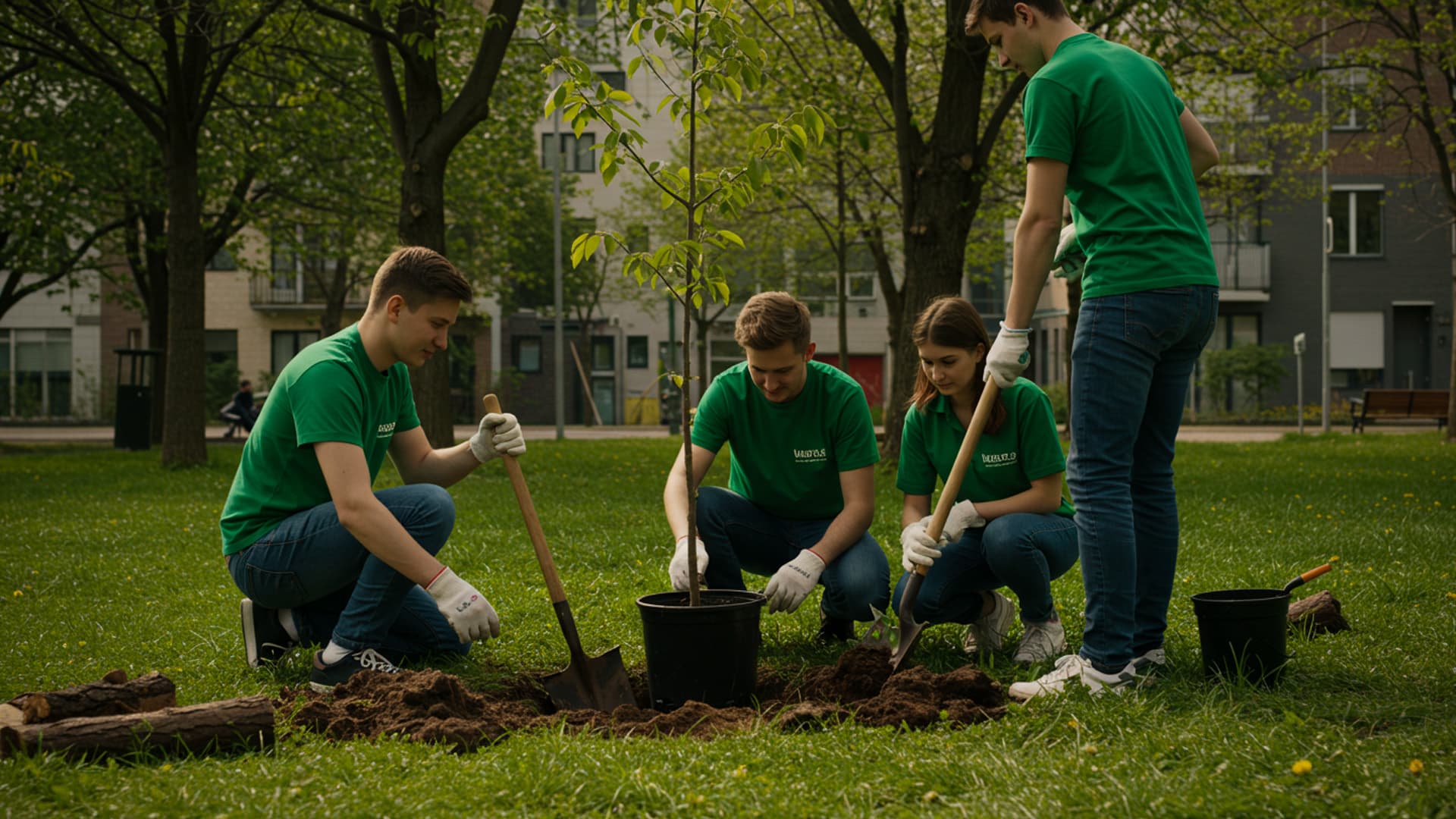
Imagine a bustling campus at dawn: solar panels glint on rooftops while students in neon vests audit LED lighting across lecture halls. This narrative isn’t fiction but the lived reality of universities embracing decarbonization, circularity, and ecological stewardship. From energy-efficient building retrofits spearheaded by engineering societies to composting cooperatives born from passionate environmental clubs, higher education is becoming a nexus for green experimentation. By weaving anecdotes, hypothetical scenarios, and technical analogies, this exploration unveils how student groups, faculties, and administrators collaborate to forge a regenerative future—one kilowatt saved, one tonne of waste diverted, and one native species reintroduced at a time.
Energizing the Future: Campus Energy Conservation Strategies
Smart Microgrid Integration
At Greenfield University, a student-run microgrid project balances solar photovoltaic arrays, battery storage, and demand-response algorithms to optimize peak load. This initiative applies power-electronic converters and advanced energy management systems—typically reserved for industrial settings—to campus buildings. Students deploy predictive analytics to forecast weather-driven generation and adjust consumption patterns, akin to a conductor guiding an orchestra of kilowatts. The microgrid not only enhances resilience during utility outages but also serves as a living laboratory, where undergraduates calibrate inverters and program real-time dashboards to visualize load curves and emission reductions.
Behind the scenes, faculty advisors mentor student teams in power-system harmonics analysis and IEC standard compliance. They refine control loops to mitigate voltage sag and frequency drift, ensuring seamless islanding capability when the main grid falters. By framing energy conservation as both a research endeavor and a hands-on workshop, the microgrid transcends textbook theory. This blend of praxis and pedagogy exemplifies how campus communities can cultivate expertise in renewable integration, laying the groundwork for graduates fluent in both technical protocols and sustainability praxis.
Retrofitting Historic Structures
Retrofit Fellowships, a cohort of architecture and heritage students, launched an audit of century-old lecture halls clad in sandstone veneer. Armed with thermal imaging firearms and infrared sensors, they identified envelope weak points—drafty sash windows and uninsulated attics. The team proposed installing aerogel-infused insulation panels and low-e glazing that preserve aesthetic integrity while slashing heat loss. This meticulous process involved heritage impact assessments and stakeholder workshops with campus preservation boards to balance energy performance with cultural conservation.
Through iterative prototyping in a mock-up room, fellows tested phase-change materials for temperature buffering, reducing HVAC cycling by up to 30 percent. Workshops on energy retrofits underlined the nuanced interplay between U-value reduction and moisture management, teaching participants to calculate dew-point trajectories and mitigate condensation risk. The project’s success catalyzed similar retrofits across campus, demonstrating that even venerable edifices can be transformed into low-energy exemplars without sacrificing character.
Behavioral Energy Interventions
Not all paradigms hinge on hardware—sometimes flipping a switch is about psychology. At Riverbend College, the Sustainability Society ran a “Kill the Vampire” campaign to unplug idle chargers from corridor outlets. They gamified dorm competition using IoT-enabled power strips that tracked phantom loads in real time. Dorms vied to minimize standby consumption, with leaderboards displayed on digital noticeboards. This initiative employed nudging techniques from behavioral economics: default-off timers, salient reminders, and peer benchmarks to reinforce energy-conscious habits.
Post-campaign surveys revealed a 15 percent reduction in plug-load energy use, proving collective behavior can rival technical upgrades. Environmental psychology seminars supplemented the project, exploring cognitive biases like status quo inertia and loss aversion. By merging ethnographic observation with randomized control trials, students gained insight into what motivates conservation: social recognition, immediate feedback, and simple aesthetic cues. Their findings now inform campus-wide awareness drives, perpetuating a culture of mindful energy stewardship.
Closing the Loop: Waste Reduction and Circular Economy on Campus
Zero-Waste Dining Halls
At Evergreen State University’s main cafeteria, the Food Sustainability Club implemented a closed-loop model: biodegradable trays, on-site anaerobic digesters, and volunteer-run scavenger teams. Leftover pulp feeds digester microbes that produce biogas, powering campus vehicles, while digestate enriches on-campus gardens. This industrial ecology-inspired loop reframes waste as resource, akin to a circular conveyor that never stalls. By mapping material flows with Sankey diagrams, students pinpointed inefficiencies—single-use utensils and plastic-laminated menus—that once thwarted zero-waste ambitions.
Workshops taught participants how to conduct life-cycle assessments, evaluating cradle-to-cradle impacts of packaging choices. With each iteration, the dining hall moved closer to a waste diversion rate exceeding 90 percent. Anecdotes of student interns experimenting with mycelium-based packaging underscored the potential for biodesign to supplant petrochemical plastics. Ultimately, the project illustrated that waste reduction demands systems thinking, stakeholder engagement, and willingness to iterate on both process and materials.
Material Upcycling Workshops
The MakerSpace at Northern Plains Institute hosts monthly upcycling hackathons. Students, guided by industrial design mentors, repurpose discarded laboratory glass into terrariums, sculptural lamps, and micro-greens propagators. Each event begins with a materials inventory—resin scraps, metal tubing, old PPE—and culminates in prototypes displayed at a campus “Circular Showcase.” Analogous to alchemy, this creative repurposing transforms “waste” into artful utility, fostering appreciation for material persistence.
Participants document repurposing flowsheets, noting energy input per object and projecting carbon savings against virgin-production baselines. These design charrettes bolster collaborative competencies: cross-pollinating ideas between chemists, artists, and entrepreneurs. Feedback loops ensure continuous improvement; workshops evolve from simple crafts to advanced digital fabrication techniques. As the hackathons mature, they epitomize how grassroots creativity can complement institutional recycling, embedding circular economy principles into campus culture.
Composting Collectives
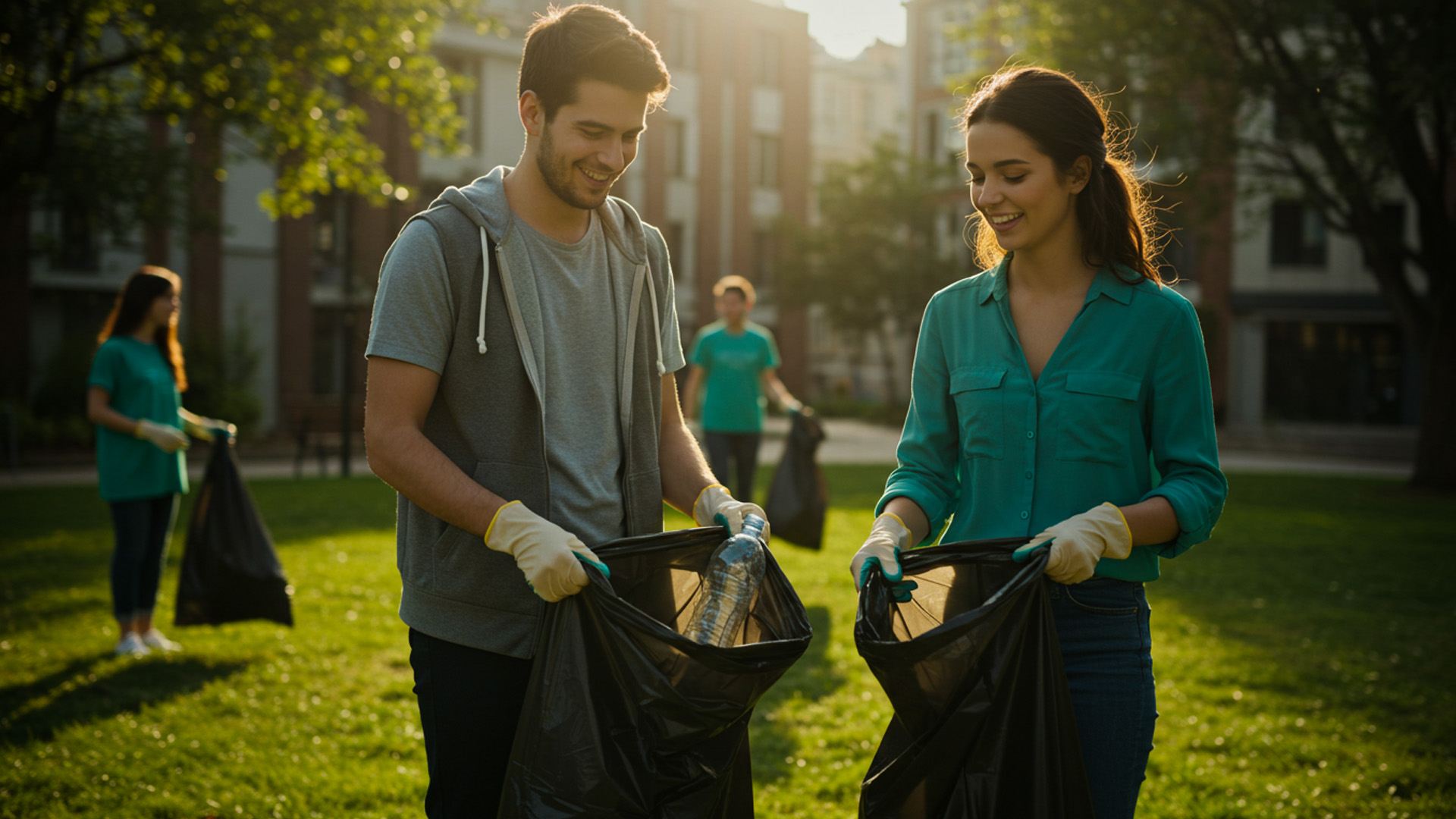
Urban campuses often lack space for large-scale composting—but at Hillside College, the EcoCouncil forged partnerships with municipal farms. They deployed vermicomposting bins in dorm basements and established a bike courier system to transport finished compost to local allotments. This symbiotic network channels organic scraps to earthworms, whose castings foster soil fertility. The initiative draws on permaculture ethics, treating waste as nutrient flux in a living ecosystem rather than a disposal problem.
Workshops on compost thermodynamics elucidate exothermic microbial phases and C:N ratio optimization. Student-led monitoring of moisture content and pH revealed best practices for pathogen mitigation. By tracking nutrient profiles in end-product analyses, participants validate agronomic benefits. The success of this decentralized composting suggests that even dense campuses can integrate regenerative agriculture, linking campus metabolism to local food systems through circular resource loops.
Cultivating Biodiversity: Green Spaces and Ecological Restoration
Native Species Pollinator Gardens
On the southern quad of Riverside College, the Environmental Science Club planted swathes of milkweed, goldenrod, and coneflower to attract monarch butterflies. They mapped habitat corridors with GIS tools to connect fragmented green patches across campus. This biogeographical approach mirrors ecological network theory, creating “stepping stones” for pollinators. Students track species richness using transect surveys and citizen-science apps, quantifying biodiversity gains seasonally.
Interpretive signage crafted by graphic design interns educates passersby on plant–pollinator symbiosis, invoking metaphors of choreography between flora and fauna. Community planting days foster stewardship, while data analytics projects model long-term population dynamics. By situating biodiversity initiatives within a narrative of network resilience, campuses transform manicured lawns into living laboratories, illustrating how minor habitat enhancements ripple through ecosystems.
Rooftop Ecosystems
Structural engineering students at Skyline Tech retrofitted a library rooftop with modular green trays and sedum mats, creating an evapotranspiration system that buffers stormwater runoff. Sensors monitor substrate moisture and solar irradiance, feeding data into an open-source dashboard. This rooftop oasis serves as a microclimate moderating experiment, demonstrating analogies between building envelopes and leaf stomata that regulate heat flux and water vapor exchange.
Lab courses integrate this living lab into environmental curriculum: students calculate thermal resistance coefficients (R-values) and quantify runoff attenuation. By comparing vegetated and non-vegetated roof sections, they assess energy savings from reduced urban heat island effects. The project underscores how vertical green spaces can augment campus resilience, merging structural design with ecological engineering to create multifunctional infrastructure.
Wetland Regeneration Labs
Lakeside University’s Biology Department restored a degraded campus pond into a functioning wetland, orchestrating hydrological modifications to re-establish native emergent vegetation. Students sequenced metagenomes of sediment microbiomes to understand nutrient cycling processes, applying concepts from microbial ecology and biogeochemistry. They monitored denitrification rates, tracking nitrate removal efficiency via mass-balance models.
Public outreach events framed the wetland as a “living filter,” illustrating metaphors of ecological purification. Data from automated sondes measuring dissolved oxygen and turbidity feed into predictive models for pollutant attenuation. Through this hands-on restoration, participants develop interdisciplinary fluency—merging wetland ecology, environmental engineering, and community engagement to revive biodiversity and water quality simultaneously.
Integrative Ecosystems: Cross-Disciplinary Sustainability Hubs
Green Innovation Incubators
At Meridian University, the Sustainability Hub unites students, faculty, and industry mentors to co-develop low-carbon prototypes—from algae-based bioplastics to kinetic-floor tiles that harvest pedestrian footsteps. This interdisciplinary incubator blends design thinking with techno-economic analysis, supported by seed grants from university endowments. Teams iterate through rapid-prototyping sprints in Fab Labs, testing material performance against circular-economy metrics.
Workshops on techno-social imaginaries challenge participants to consider societal adoption pathways. By convening policy scholars, engineers, and business students, the incubator fosters boundary-spanning collaborations. Each prototype undergoes life-cycle cost modeling, carbon footprint audits, and stakeholder validation, ensuring that green innovations are both technically robust and societally viable.
Living Labs and Research Collaborations
The Eco-Engineering Department at Continental College launched a campus-scale living lab where building automation systems, water reclamation modules, and biodiversity plots interconnect. Academic researchers partner with student-led governance boards to experiment with sensor networks and AI-driven optimization. This cyber-physical ecosystem embodies the Internet of Things applied to sustainability, enabling real-time adjustments to irrigation schedules and HVAC setpoints based on occupancy patterns.
Graduate seminars teach participants how to develop digital twins of campus infrastructure, using simulation outputs to refine operational protocols. Through these living labs, universities become testbeds for emergent technologies, accelerating knowledge transfer to industry while equipping students with systems-level expertise in sustainability innovation.
Governance and Community Engagement Councils
Sustainability governance on campus requires more than technical fixes; it demands participatory frameworks. At Horizon University, the Sustainability Council includes elected student representatives, faculty liaisons, and administrative officers who co-create policy roadmaps. They employ deliberative democracy techniques, using world cafés and scenario workshops to envision carbon-neutral futures. Policy drafts undergo public comment periods, ensuring transparency.
Analogous to ecological succession, governance structures evolve: pilot task forces experiment with green procurement standards, which later scale university-wide. By institutionalizing metrics—greenhouse gas inventories, waste audits, biodiversity indices—the council maintains accountability and fosters a culture where every campus stakeholder becomes a steward of sustainability.
Elisha Roodt
Sharing authentic stories and expert insights from the heart of South Africa's higher education landscape.
More From News
Access vs Success: The Gap Between Getting In and Thriving in South African Universities
Why Opening the Gates Isn’t the Same as Crossing the Finish Line Every January, South Africa celebrates as hopeful students clutch their...

Top 5 Student Accommodation Options Near Major South African Universities
Finding the Right Place to Call Home During University Years Choosing where to live during university years is more than just securing a bed and a...

Harnessing Digital Transformation
South African universities are embracing digital transformation to enhance student success. Institutions like Tshwane University of Technology are collaborating with tech giants such as IBM and Huawei to create innovation hubs, providing students with practical, workplace-based projects. This approach aims to ensure that all stakeholders—senior management, staff, and students—are actively involved in the digital transformation journey